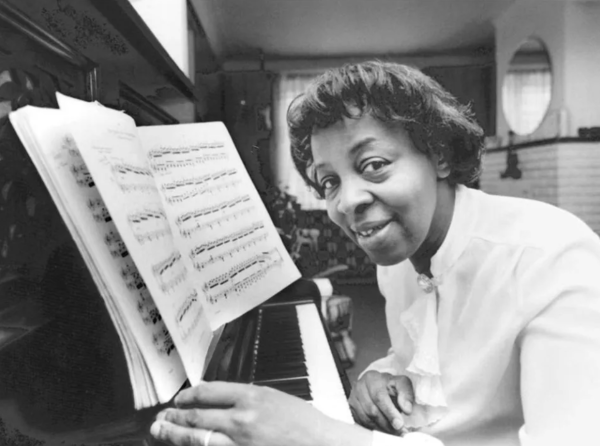
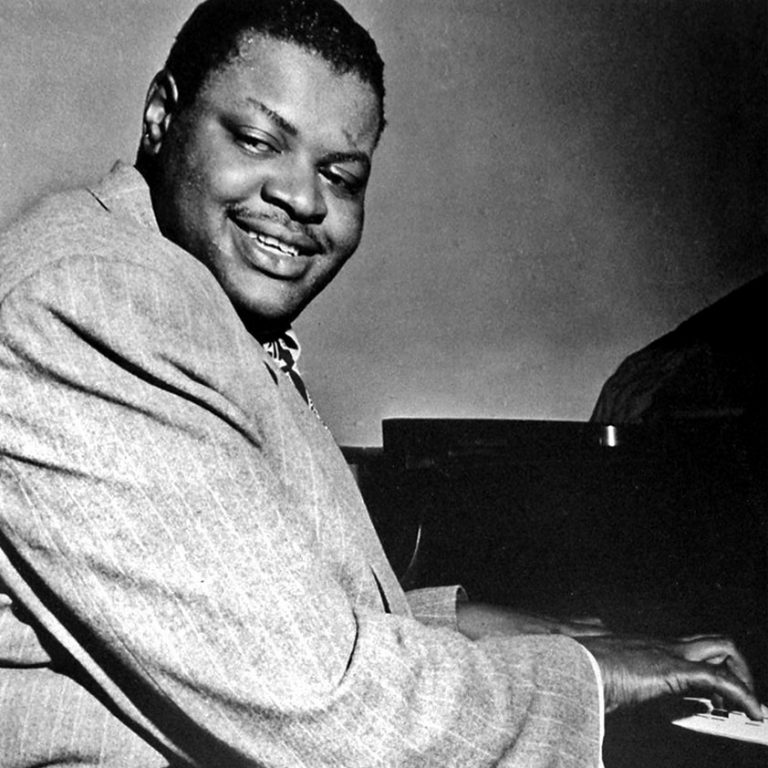
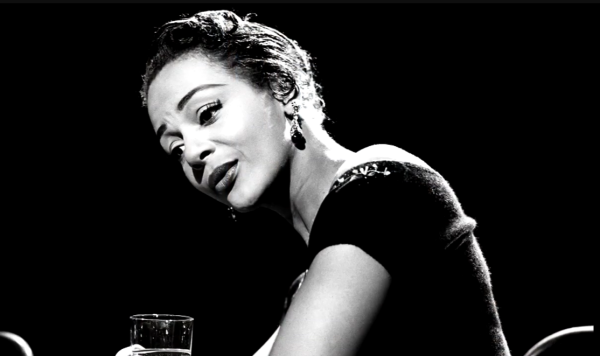
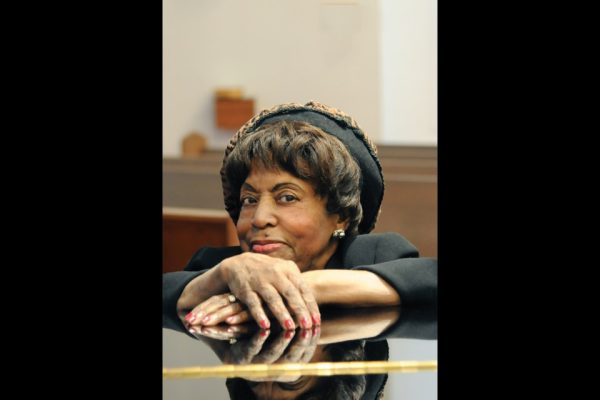
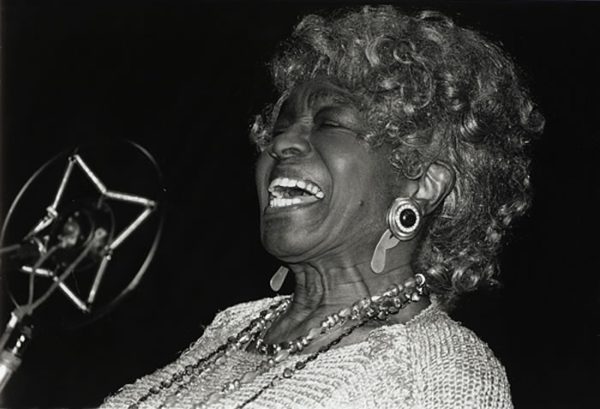
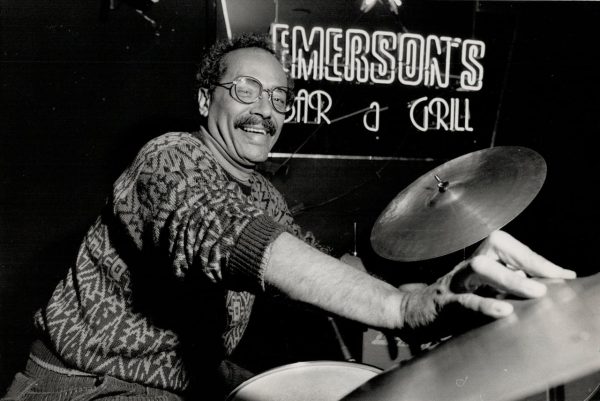
L to R: Oliver Jones, Eleanor Collins, Charlie Biddle & Salome Bey
There’s no doubt about jazz’s impact on the world as a genre that speaks to the heart and soul of a people. Canada’s Black Community has made incredible contributions to the genre with cross-border collaborations that have influenced each other.
We take a look at some of the Black musicians, vocalists and entertainers of the 20th century who shaped the genre and left their mark in the world of jazz. For more extensive information on Black Music in Canada, check out Canada Black Music Archive, a digital archive that collects and documents 100 years of Black Music in Canada.
Charlie Biddle, the Father of the Montreal International Jazz Festival
In 1948, a young man named Charles Reed Biddle arrived in Montreal by way of Philadelphia, his hometown. He was on tour as a session bassist with saxophonist and bandleader Vernon Isaac’s Three Jacks and a Jill. Impressed by the integration of Black and white musicians playing alongside each other, Biddle decided to make Montreal his home for the next 55 years.
He settled down, got married to his wife Constance and together they raised four children. While working during the day as a car salesman, at night Biddle would be performing in various nightclubs across Montreal alongside Charlie Ramsey, Sadik Hakim and host of jazz pianists. He also formed the Charlie Biddle Trio with his daughter Stephanie and son Charles Jr. who performed regularly during the 80s and the 90s. He became a promoter who was responsible for bringing the best in jazz to the city such as John Coltrane, Bill Evans and Art Farmer. He also organized various jazz events in Montreal, including Jazz Chez Nous, a three-day Jazz Festival in 1979 and again in 1983. This festival laid the foundation for the Montreal International Jazz Festival, considered the world’s largest jazz festival.
In 1981, with George Durst, he opened Biddle’s Jazz and Ribs on Aylmer Street in Montreal where he performed regularly. The club served as a launchpad for some of the best in Canadian jazz including fellow Montrealer Oliver Jones who was discovered at Biddle’s by Jim West, as well as vocalist Ranee Lee and drummer Bernard Primeau. The club also appeared in the movies, most notably Bruce Willis’ Whole Nine Yards.
Biddle became a Canadian citizen in 2000 and was awarded the Order of Canada in 2002, a year before his death in 2003. Biddle’s was renamed House of Jazz in 2005 and was ran by co-owner George Durst’s daughter before it closed for good in the Summer of 2020.
Daisy Peterson Sweeney, The Woman Who Shaped Canadian Jazz
There may not have been an Oscar Peterson or an Oliver Jones without Daisy Peterson Sweeney. The older sister of jazz great Oscar Peterson was raised in the Little Burgundy community of Montreal. She and her siblings were taught the piano by their father, who worked as a railway porter and was a self-taught pianist. It was Daisy who taught her siblings how to play the piano and various compositions. She continued her piano studies by obtaining an Associate degree in Music from McGill University, which she paid for by working as a domestic, seamstress and even as a riveter at an airplane factory. Known for her recitals in the community, she also began teaching piano and music theory at the the Negro Community Centre (NCC), hosting Saturday lessons to the children in the neighbourhood.
In addition to her brother Oscar and Oliver, she also taught other notable Canadian musicians such as Ken Skinner, Joe Sealey, Reg Wilson and Norman Villeneuve. She was also an accomplished organist who founded the Black Community Youth Choir now known as the Montreal Jubilation Gospel Choir.
Oscar Peterson, A National Treasure
What can you say about Oscar Peterson? There’s not enough words to describe Peterson’s impact on the jazz world. Dinner Jazz host John Devenish says it best:
“He was the brilliant artist that he was because there was not a single element of skill foundation out of place. He was as demanding of himself and his music as he was of those who made music with him. His demand was as respected and understood as it was enjoyed. The communal sound remains unmatched. The piano was like Ali’s ring. A place where art in motion, like sport, applied blinding skill that made the result look like ease. That’s when the artistry brought all of the elements together to give life, emotion, and enjoyment to an always beautiful, momentum-graced fancy.”
2025 is the centennial of Oscar Peterson’s birth with various celebrations taking place, including a star-studded celebration at Massey Hall on June 14.
Oliver Jones, Celebrated Jazz Pianist
Another son of Little Burgundy born to parents from Barbados in 1934, Oliver Jones, like his friend and frequent collaborator Oscar Peterson, was taught by Daisy Peterson Sweeney. A child prodigy, Jones performed at various clubs and venues throughout the city of Montreal, including Rockhead’s Paradise, considered the first Black-owned nightclub in Canada. He spent close to 20 years touring all over the world with the Kenny Hamilton Orchestra before returning to Montreal in 1980 where he became the resident pianist at Biddle’s.
Jones has released over 25 albums and was awarded the Order of Canada in 1993 and was inducted into the Canadian Music Hall of Fame in 2023. Oliver Jones celebrated his 90th Birthday in September 2024.
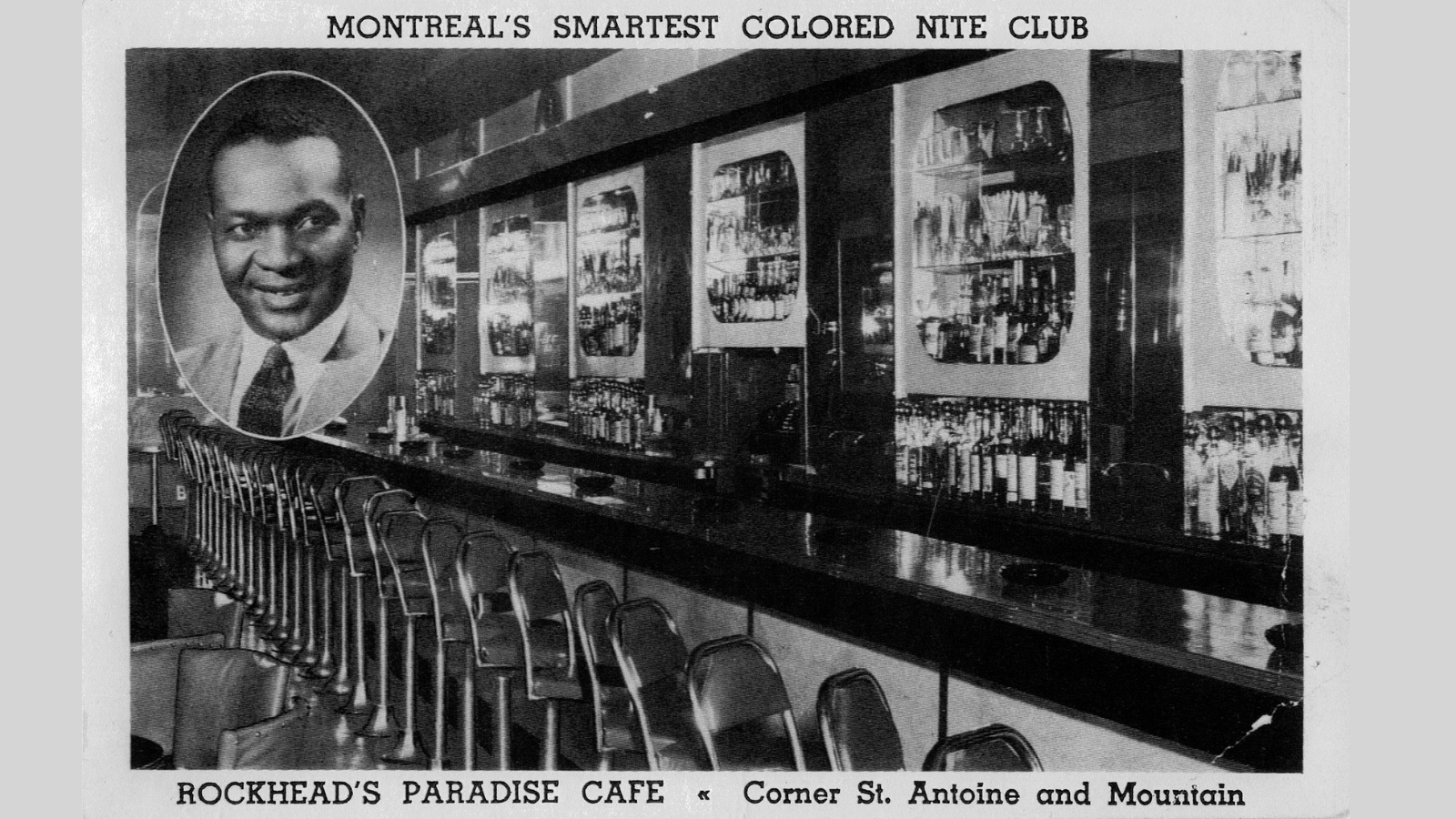
Rufus Rockhead, Pioneer of Canada’s Black Nightclub Scene
Born in 1896 in Maroon Town, Jamaica, Rufus Nathaniel Rockhead migrated to Canada in 1916 settling in Montreal and later serving in the First World War with the Canadian Forestry Corps in France. Returning to Montreal in 1919 after being honourably discharged, Rockhead later worked as a railway porter with the Canadian Pacific Railway until 1927. He pivoted into entrepreneurship by launching a hat cleaning and shoeshine business in the Montreal borough of Verdun where he married Elizabeth “Birdie” Weeks and raised their three children.
In 1928, Rockhead purchased the Mountain Hotel in Little Burgundy, a historic, well-known Black community located in St-Antoine district of Montreal. The building had three floors that housed a tavern, lunch counter, a dining room, nightclub and a hotel. The second-floor hosted the nightclub that would become Rockhead’s Paradise.
Rockhead’s Paradise became a must-see travel destination for tourists visiting Montreal as well as a space for burgeoning Black musicians to hone their craft and have the platform to perform their work in front of a live audience. The club would launch the careers of jazz musicians such as Oscar Peterson, Oliver Jones, Harold “Steep” Wade and the Sealey Brothers to name a few. It would be visited by jazz legends such as Louis Armstrong, Cab Calloway, Ella Fitzgerald, and Billie Holiday, making it an important stop on Montreal’s jazz circuit.
Eleanor Collins, Canada’s First Lady of Jazz
March 3 will mark one year since we lost Eleanor Collins at the extraordinary age of 104. She held many firsts, The first Black Woman, person of colour and jazz singer to headline her own national television show in Canada with The Eleanor Show. Born on November 21, 1919 in Edmonton, Alberta, Collins started performing in the 1930s when she moved to Vancouver where she got her start singing with the gospel quartet Swing Low Quartet. By the 1950s, she made the transition to jazz and started performing with the Ray Norris Quintet, becoming Vancouver’s first lady of jazz. In 1954, she made her television debut in CBC’s Bamboula: A Day in the West Indies, the first variety television show with a mixed-race cast. A year later, she would become the star of The Eleanor Show.
Vancouver’s First Lady of Jazz, the city she made her home for the remainder of her life.
Phyllis Marshall, Pioneer among Black Canadian Performers
A Canadian triple threat of some sorts. Actress, model and singer Phyllis Marshall was born in 1921 in Barrie, Ontario to American parents and got her start playing the piano as a child. At 15, she made her radio debut on local Toronto radio station CRCT (now known as CBC Radio One 99.1FM) which would lead her to appear on radio shows such as Blues for Fridays and on Canadian television shows such as The Big Revue.
She performed with the likes of Oscar Peterson and the Cab Calloway Orchestra during the 1940s and 1950s. She became a regular on Blues for Friday from 1949 to 1952 and in 1959 had her own special BBC called The Phyllis Marshall Special. In 1964, she released her first LP, That Girl, which won the JUNO award for “Good Music Product LP.” She was Canadian jazz royalty, especially in the UK where she performed regularly until her death in 1996.
Ada Lee, One of the Greatest Jazz Voices of Her Time
This Springfield, Ohio native was born into a musical family and formally trained in classical, gospel, jazz, and blues. She hit the music scene in 1957 and released her debut album, Ada Lee Come On! in 1961. She moved to Canada in the 1960s with her husband and they settled in Peterborough, Ontario. She continued to perform and collaborated with everyone from Count Basie, Duke Ellington, Lionel Hampton to Guido Basso, Moe Koffman, and Don Thompson. She is a beloved fixture in the Peterborough community, having founded the Voices for Life Gospel Choir. Although she relocated to Vancouver in 2014, she often returns to Peterborough for special events and appearances, including receiving the key to the city in 2019.
Salome Bey, Canada’s First Lady of the Blues
Born in New Jersey in 1933, Salome Bey started her career singing in her family trio Andy and the Bey Sisters. The trio gained traction and began touring in Europe and the United States before she relocated to Toronto in the 1960s where she began her solo career. She married Howard Matthews, co-owner of legendary The Underground Railroad, one of the first soul food restaurants in Toronto and together they raised their three children in the city.
Bey also started performing in musical theatre and even created and starred in her own cabaret show called Indigo which celebrated the history of Black Music from jazz to blues. The show ran 1978-1980 and won two Dora Mavor Moore Awards for Outstanding Performance in a Revue or Musical and Outstanding Production of a Cabaret or Revue.
While Bey passed away in August 2020, her legacy continues through her daughters tUkU Matthews and SATE, both vocalists who started out in their mother’s band Salome Bey and the Relatives and co-founders of 90s jazz soul band bLaXaM along with rocker Washington Savage.
Jodie Drake, the only Canadian to be inducted into the New Orleans Jazz Hall of Fame
Born Priscilla Royster in Detroit, the woman who would become Jodie Drake stumbled into a music career by accident when she started performing in the band Spirits of Swing. When her young sister was barred from performing by their mother, it was Drake who took her place in the band. Their music took them on tour throughout Canada, from Montreal to Toronto where Jodie eventually settled and established herself as one of Canada’s esteemed performers in jazz and blues.
In the 1970s, she hosted a CBC show with Gene DiNovi called Gene and Jodie which showcased performances by top jazz artists of the time. She was the subject of 1991 documentary titled Jodie Drake: Blues in my Bread produced by Christene Browne for CBC.
Archie Alleyne, Drummer & Champion for Black Musicians
This prolific jazz drummer grew up in Kensington Market and started his music career as a child playing the drums at a local church on Bathurst and College streets. He played various gigs before meeting Long & McQuade founder Jack Long who introduced Alleyne to jazz clubs around the city. He became the resident house drummer at the Town Tavern in 1955 where he played alongside Billie Holiday, Ben Webster, Don Thompson and Lester Young.
Following a car accident in the 1960s, Alleyne became a co-owner of The Underground Railroad, one of the first Black-owned soul food restaurant in Toronto, which he co-ran until 1980 when he returned to music by touring with Oliver Jones. Dissatisfied with the lack of support for jazz music and Black musicians, Alleyne became an advocate for jazz musicians and founded the Archie Alleyne Scholarship Fund for music students. His artistry and activism earned him an appointment to the Order of Canada in 2012.